Math Identity
Reflections from "Math... and other things" with Liesl McConchie

I recently listened to an episode of the Math and Other Things podcast with Liesl McConchie. You can see my highlights in Snipd. One sentence stayed with me:
“The way I define math identity is how I see myself in relation to math.”
Simple. Beautiful.
And because that’s true, it changes our perspective on “teaching.”
If students do not have a positive math identity, they are unlikely to perform well in math.
Not because they lack intelligence.
Not because the curriculum is wrong.
But because of how they see themselves.
Here are five ideas from the episode that I keep turning over in my head.
1. Math Identity Drives Math Performance
When students believe they are “bad at math,” their brain is more likely to treat math as a threat.
The amygdala kicks in & reasoning shuts down.
Suddenly math class becomes something to survive rather than something to enjoy.
This shows up when I work with parents/caregivers as well. Many adults carry stories like:
“I was never a math person.”
“Math just wasn’t my thing.”
“I was good at reading, not math.”
When we unpack those stories, they almost always trace back to a few pivotal moments: a timed test, a teacher’s comment, or being told “it’s ok that math isn’t your thing.” I also commonly hear that they were always good at math but the moment math suddenly got hard, they gave up. (We’ll talk about Growth vs Fixed Mindset another day).
Those moments become identity markers.
No wonder families sometimes struggle to understand how math is taught today. Many adults are still carrying invisible math trauma from their own schooling, and that experience shapes the lens through which they view their child’s math education.
This is why when I work with parents I begin with a math timeline. We go back and identify the moments that confirmed for them that they were either good at math or bad at math. We find pivot points and moments of resilience. We discuss how these moments impacted their adult lives.
2. The Teacher’s Belief in Students Matters More Than We Think
Research consistently shows that teacher expectations are one of the strongest influences on student success, with John Hattie’s work finding a 1.29 effect size.
But this doesn’t show up in lesson plans.
It shows up in what Liesl referred to as the vibe of the classroom.
Students know when a teacher believes:
everyone can figure things out
struggle is normal
mistakes are useful
And they know when that belief isn’t there.
Deborah Peart Crayton’s framing of “Mather’s Math” pushed my thinking here. Her work invites us to consider who sees themselves as someone who does math and how classroom environments shape that sense of belonging. We all expect our students will learn how to read, we all expect them to learn how to write. Why do we allow students to opt out of math?
3. Hope + Success Are Both Necessary
One connection I kept making while listening to the episode relates to navigation tools in Building Thinking Classrooms.
Peter Liljedahl explains that if we want students to develop real agency, we cannot simply tell them how to get out of the maze (his apropos metaphor for curriculum). Instead, we need to provide a map of the maze so they can find their own way through it (always with our support & guidance).
When students can see possible pathways, they experience hope.
And as they move through the problem and reach meaningful checkpoints along the way, they experience success.
Students need both.
They need to believe:
Maybe I can figure this out.
I’ve figured things out before.
When both exist, students stay engaged.
Without hope, they stop trying.
Without success, hope eventually fades.
Navigation tools help students (& teachers) maintain both.
4. What We Ask Students Reveals Their Math Identity
If math identity is how someone sees themselves in relation to math, then we should probably ask students about that relationship.
Recently we ran a student survey at school.
Students in Grades 2–4 were asked:
What is math?
Students in Pre-K through Grade 1 were asked to draw a picture of themselves doing math:
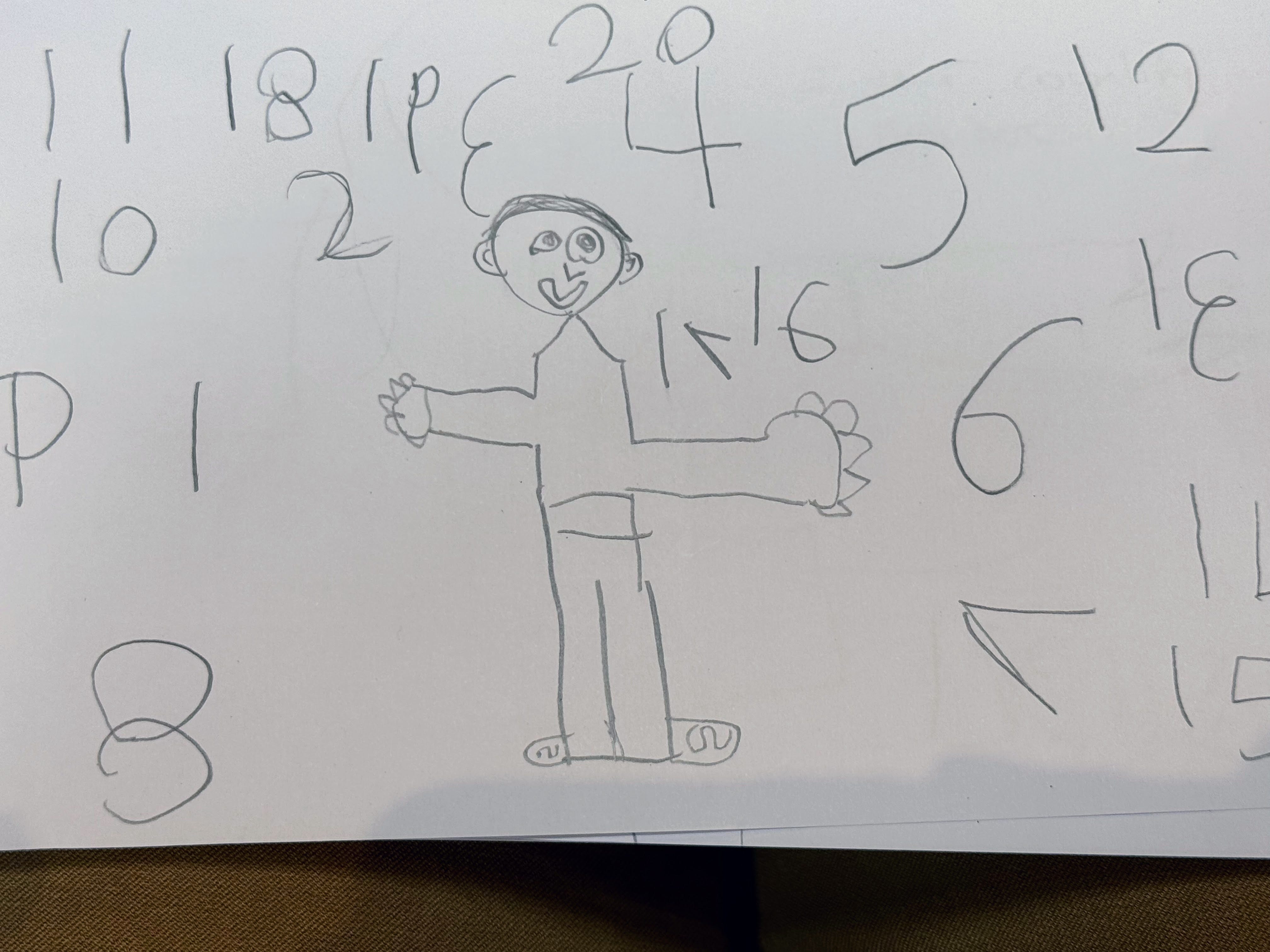
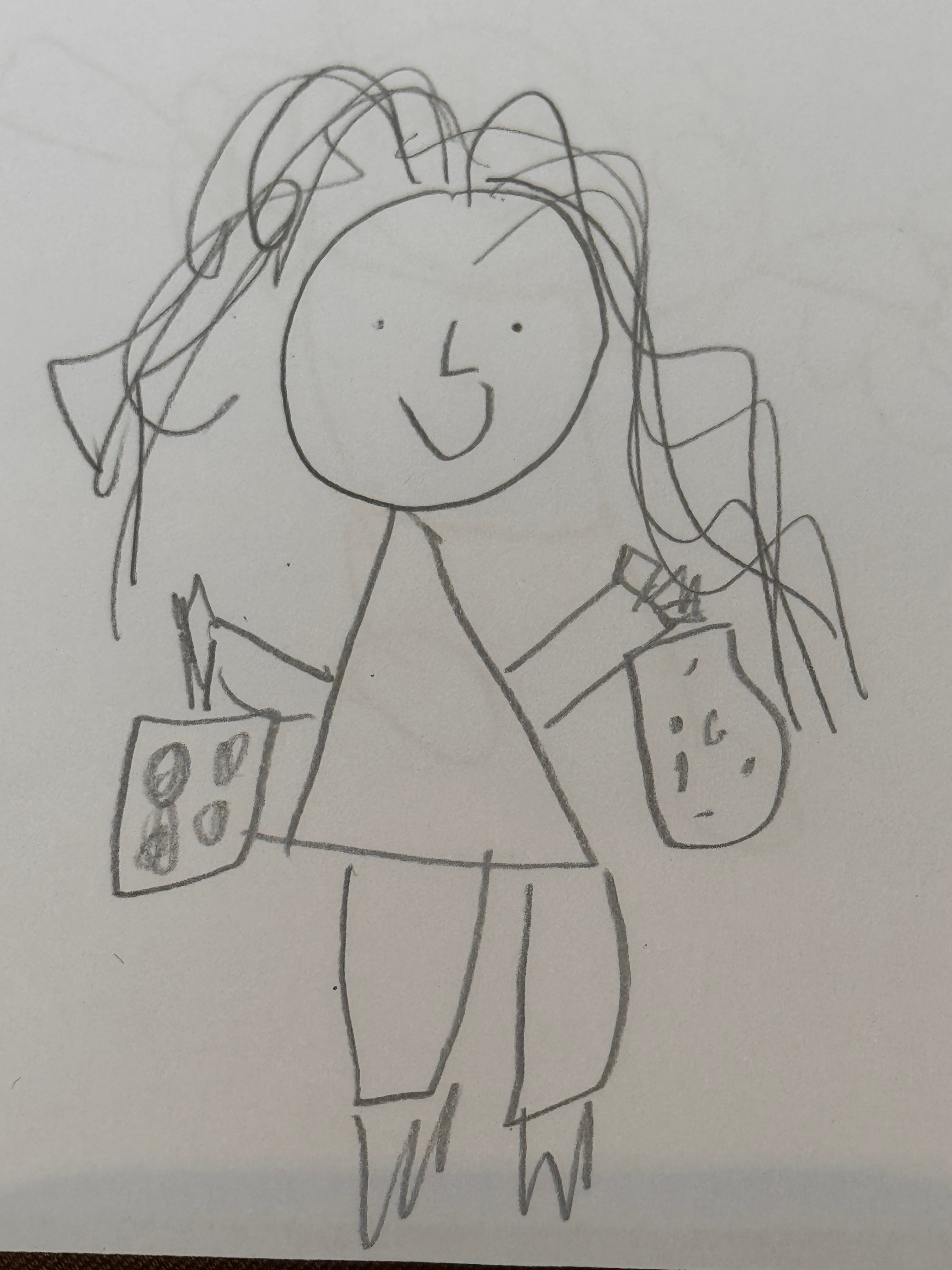
Responses varied from images of themselves surrounded by numbers, to one who said, “I am estimating which bag is heavier.”
They reveal whether students see the math they are doing in school as connected to the larger field of mathematics…
…or if math, in their minds, is simply numbers, calculations, and algorithms.
What we are noticing so far is interesting. Our youngest learners, whose math experiences are often play-based and not always labeled explicitly as “math time,” are actually more likely to describe math in narrow ways while our older students tend to describe math more broadly.
“It is a tool to help us understand things around us, from entropy to an apple.” ~3rd Grader
“Math is questions for your brain” ~3rd Grader
“For me math is a new world. It is like an adventure and every time you practice you enter a new level. Math is amazing and lucky for me my nana (grandfather) is amazing at math so he teaches me when I come to meet him. I love math.” ~4th Grader
5. A Question About Identity and Brain Development
One question the episode left me with:
If identity formation is tied to the prefrontal cortex, and the prefrontal cortex is the last part of the brain to develop, what does that mean for math identity in elementary school?
If that part of the brain is still developing throughout childhood…
How stable are the identities students form during those years?
And what experiences might matter most while that identity is still forming?
Maybe Liesl McConchie will weigh in. 😉
A Final Thought
Liesl explores many of these ideas in her book Brain-Based Learning: Teaching the Way Students Really Learn.
But my biggest takeaway from the episode was this:
Improving math learning is not just about teaching better math.
It’s about helping students believe something powerful about themselves:
I am someone who can think mathematically.
When that identity takes hold, everything else becomes possible.
Her book just arrived in my office this week and I can’t wait to crack it open!